
The loss of a loved one often leaves the family faced with practical and legal responsibilities that often feel overwhelming. The most common processes people encounter after someone passes away is the probate process.
Probate can seem confusing at first, especially if you’ve never handled an estate before. However, understanding the process makes it easier to navigate
In this blog, we’ll explain the probate process in the UK in a simple, clear, and friendly way.
What Is Probate?
Probate in simple terms is the legal process of dealing with a deceased person’s estate. An estate includes everything they owned, such as:
- Property
- Savings and bank accounts
- Investments
- Personal belongings
Probate grants another person the legal authority to manage these assets, settle debts, and distribute what remains to beneficiaries.
If there is a valid will, the person responsible is usually called the executor. If there is no will, the court appoints an administrator.
Is Probate Always Required?
It is Not always.
Whether probate is needed depends on:
- The value of the estate
- The type of assets involved
- How assets were owned
For example:
- Jointly owned property may pass automatically to the surviving owner
- Small estates may not require probate at all
However, banks and financial institutions often require a Grant of Probate before releasing funds.
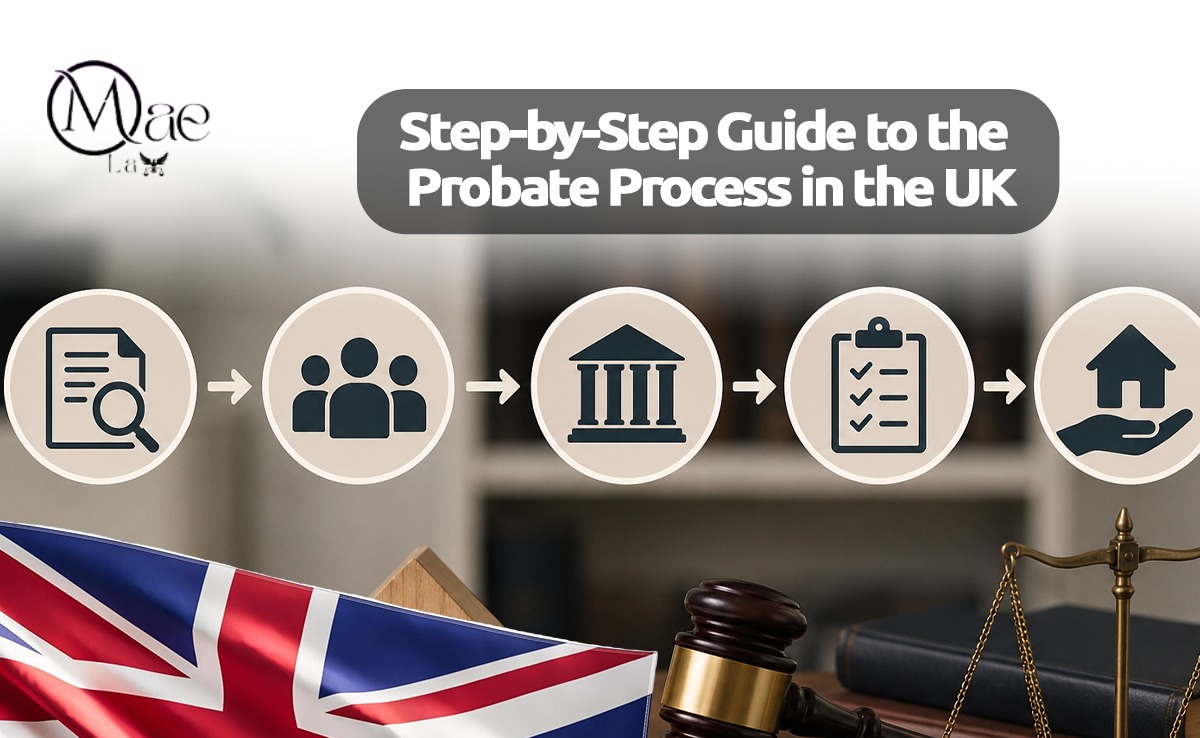
The Step-by-Step Process
Step 1: Register the Death
Registering the death is the first legal step. In the UK, a death must usually be registered within 5 days in England, Wales, and Northern Ireland and 8 days in Scotland
After Registration, you’ll receive:
- A death certificate
- Documents needed for funeral arrangements and probate
It’s advised to request multiple copies of the death certificate, as many organisations will ask for one.
Step 2: Locate the Will and the Executors/Administrators
The next step is to check whether or not the deceased left a valid will.
The will usually names:
- Executors
- Beneficiaries
- Instructions for distributing the estate
Common places to check include:
- The person’s home
- Their solicitor’s office
- Banks or document storage services
Step 3: Valuing the Estate
After the funeral and initial arrangements, the personal representatives (PRs) need to identify and value all the deceased person’s assets and debts. This information is required to complete the inheritance tax (IHT) forms for HMRC.
This may involve contacting banks, investment providers, or other institutions to confirm account balances and asset values. In some cases, professional valuations may be needed for property or valuable items.
Any outstanding debts, loans, overdrafts, or unpaid taxes must also be included and settled from the estate when funds become available.
If the PRs are unsure whether all assets or liabilities have been identified, they can carry out a financial asset search to help locate missing information.
Step 4: Check If Inheritance Tax Is Owed
Inheritance Tax (IHT) payment may be required depending on the value of the estate.
Currently in the UK:
- Many estates fall below the tax threshold
- Certain exemptions and reliefs may apply
Even if no tax is due, forms may still need to be completed and submitted to HMRC.
This stage can feel complicated, so many families seek professional help here.
Step 5: Applying for Probate
Once the inheritance tax process is completed, an application can be made for the grant of probate or letters of administration.
This legal document gives the personal representatives authority to manage the deceased’s estate, including collecting assets, paying debts, and distributing the estate according to the will or intestacy rules if there is no will. A grant of probate is issued when there is a valid will, while letters of administration are issued when someone dies without one.
The process and timeline can vary depending on the complexity of the estate, and applications may be made online or by paper. The original will must also be submitted to the probate registry, and while some grants are issued quickly, others can take several weeks.
Step 6: Managing the Estate After Probate
Once probate has been granted, the personal representatives (PRs) can begin collecting the deceased’s assets. They are required to first settle any outstanding debts and expenses before distributing gifts, money, or other assets to beneficiaries.
During this process, the PRs are required to keep clear estate accounts showing all money received and payments made. They may also need to complete tax returns for any income or gains made during the administration period. After everything has been settled, the remaining estate can be distributed either as cash or by transferring assets directly to the beneficiaries.
What Happens If There Is No Will?
If someone dies without a will, they are said to have died intestate.
In this situation:
- Intestacy laws determine who inherits
- Family members apply for Letters of Administration
- Distribution follows a legal order of priority
Unfortunately, this can sometimes lead to confusion or disputes among relatives.
Why Professional Help Can Be Useful
Probate can be time-consuming and emotionally draining, especially while grieving.
Many people choose to work with:
- Solicitors
- Probate specialists
- Estate administration professionals
Professional support can help:
- Reduce stress
- Avoid mistakes
- Ensure legal compliance
This is especially helpful for larger or more complicated estates.
Conclusion
The probate process can feel overwhelming at first, especially during an already emotional time. But understanding the process makes it far less overwhelming.
While every estate is different, taking the process step by step helps ensure everything is handled properly and respectfully.
Most importantly, remember that you don’t have to handle everything alone. Professional guidance can make the journey smoother and give families peace of mind during a difficult period.
For more information and guidance, contact us now.
This Post Has 0 Comments