
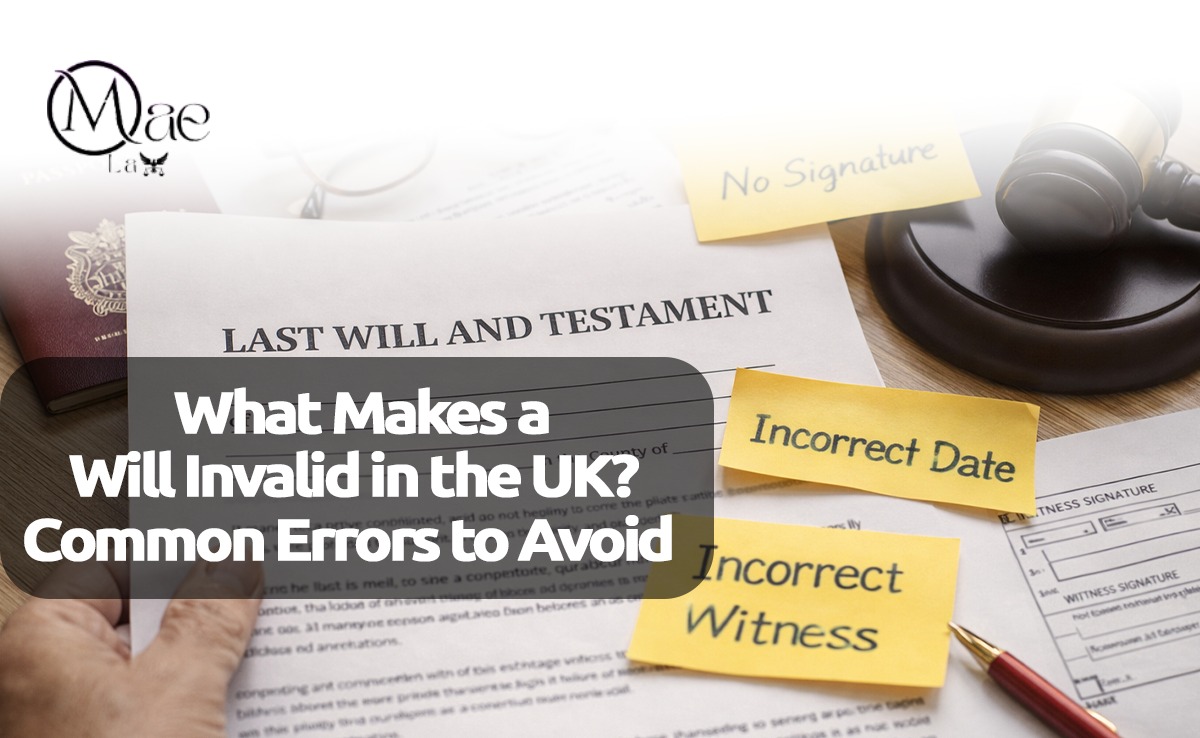
Making a will is one of the most important steps you can take to protect your family and make sure your wishes are respected after you’re gone. Yet, many people are surprised to learn that not all wills are legally valid. In fact, small mistakes, sometimes even technical ones, can cause serious problems.
If a will is declared invalid, your estate may be distributed under the rules of intestacy set out in the Administration of Estates Act 1925, rather than according to your personal wishes. That could mean the wrong people inherit, or the right people receive far less than you intended.
Let’s walk through what makes a will invalid in the UK and the most common errors you should avoid.
1. The Will Is Not Properly Signed and Witnessed
Under the Wills Act 1837, for a will to be legally valid in England and Wales, it must:
- Be in writing
- Be signed by the person making the will (the testator)
- Be signed in the presence of two witnesses
This is where many wills fail.
Common Mistakes:
- Only one witness signs
- Witnesses were not present at the same time
- A beneficiary (or their spouse) acts as a witness
- The testator did not actually sign the will
If a beneficiary witnesses the will, the will itself may remain valid, but the gift to that beneficiary could fail. That can create confusion, disputes, and unintended outcomes.
2. Undue Influence
Undue influence happens when someone is pressured, manipulated, or coerced into making a will that does not reflect their true wishes. This often occurs where a person in a position of trust or authority, such as a caregiver, family member, or close associate, uses their influence to persuade the testator to include or exclude certain beneficiaries. In simple terms, the will may be challenged if it was not made freely and independently.
To successfully contest a will on the grounds of undue influence, it must be proven that the person exerting pressure had a relationship of trust with the testator and used that position to override their free will. Courts will look at factors such as the nature of the relationship, the testator’s mental or physical condition, the timing of the will, and any suspicious circumstances. If undue influence is established, the court may declare the will invalid or vary its terms, and the estate may then be distributed under intestacy rules or a previous valid will. Because proving undue influence can be complex, early legal advice is essential.
3. Fraud or Forgery
If a will is forged or signed fraudulently, it is automatically invalid.
This might include:
- Someone forging the testator’s signature
- Substituting pages
- Tricking the testator into signing something they don’t understand
Though rare, fraud cases do occur, particularly where estates are large or family relationships are strained.
4. The Will Was Revoked
Even a properly drafted will can become invalid if it is revoked.
In the UK, a will can be revoked by:
- Making a new will
- Destroying the will with the intention to revoke it
- Marriage (in most cases)
Yes, marriage automatically revokes an existing will unless it was made “in contemplation of marriage.
This rule surprises many people. If you marry and fail to update your will, your estate could be distributed under intestacy rules instead.
5. Failure to Provide for Dependants
Even if a will is technically valid, it can still be challenged under the Inheritance (Provision for Family and Dependants) Act 1975.
Certain individuals can apply to the court if they believe they were not reasonably provided for, including:
- Spouses
- Former spouses (in some cases)
- Children
- Financial dependants
If the court agrees, it can alter how the estate is distributed, even if the will itself remains valid.
What Happens If a Will Is Invalid?
If a will is declared invalid:
- The estate may pass under intestacy rules
- Previous valid wills (if any) may take effect
- Family disputes may arise
- Probate may be delayed
- Legal costs can reduce the estate’s value
In many cases, what the deceased “intended” becomes irrelevant if the legal requirements were not met.
How to Avoid These Common Errors
Here are some practical steps to protect your will:
- Use a qualified solicitor
- Ensure proper witnessing
- Review your will regularly
- Update after major life events
- Keep it safely stored
- Communicate your wishes where appropriate
The small investment in proper drafting can save your family significant emotional and financial stress later.
Conclusion
A will is meant to bring clarity and peace of mind, not confusion and conflict.
Most invalid wills are not the result of bad intentions. They are the result of small technical mistakes, misunderstandings about the law, or failure to update documents after major life changes.
The good news? Almost all of these problems are preventable.
If you’re making your first will, updating an old one, or concerned about a loved one’s estate planning, taking proper legal advice can make all the difference. Contact us now for guidance.
This Post Has 0 Comments