Money laundering is the process of concealing the source of illegally obtained money to make it appear legitimate. It is often associated with to crimes such as fraud, corruption, drug trafficking, cybercrime, and terrorism financing. To combat these crimes, Nigeria has established laws and institutions that work together to detect, prevent, and prosecute money laundering.
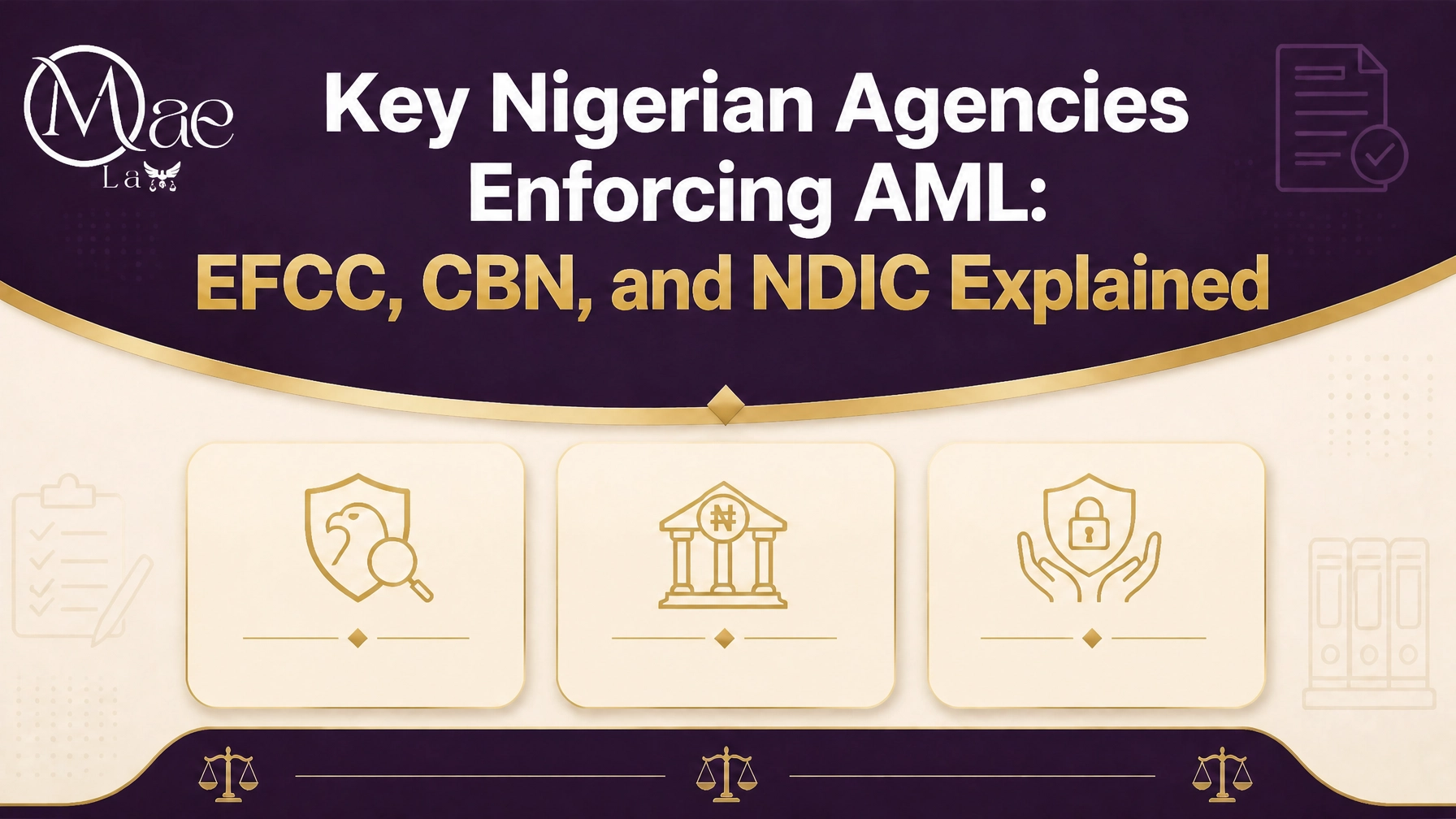
Three of the key agencies saddled with the responsibility of enforcing Anti-Money Laundering (AML) laws in Nigeria include the Economic and Financial Crimes Commission (EFCC), the Central Bank of Nigeria (CBN), and the Nigeria Deposit Insurance Corporation (NDIC). While they all contribute to the fight against financial crime, each has a different role.
What is Anti-Money Laundering (AML)?
Anti-Money Laundering (AML) refers to the laws, regulations, and procedures designed to prevent criminals from using the financial system to hide illegal funds.
AML measures require banks and certain businesses to:
- Verify customers’ identities (Know Your Customer or KYC)
- Monitor transactions
- Report suspicious activities
- Keep proper records
- Maintain effective compliance programmes
These measures help protect Nigeria’s financial system from abuse.
1. Economic and Financial Crimes Commission (EFCC)
The EFCC is Nigeria’s leading agency for investigating and prosecuting financial crimes. Established in 2003, it handles offences such as money laundering, fraud, cybercrime, corruption, and terrorism financing.
The EFCC serves as the country’s primary law enforcement agency against financial crimes. Its investigations have led to the recovery of billions of naira and other assets linked to corruption, fraud, and money laundering.
Its work also serves as a deterrent by sending a strong message that financial crimes carry serious legal consequences.
Its key responsibilities include:
- Investigating suspected money laundering cases
- Tracing and recovering proceeds of crime
- Prosecuting offenders
- Freezing suspicious assets through legal processes
- Working with local and international law enforcement agencies
The EFCC plays a major role in ensuring that individuals and organisations involved in financial crimes are held accountable.
2. Central Bank of Nigeria (CBN)
The Central Bank of Nigeria (CBN) is responsible for regulating banks and other licensed financial institutions. Rather than investigating financial crimes, its primary role is to prevent money laundering by setting and enforcing Anti-Money Laundering (AML) and Countering the Financing of Terrorism (CFT) regulations.
To protect the integrity of Nigeria’s financial system, the CBN supervises a wide range of financial institutions, including commercial banks, merchant banks, non-interest banks, microfinance banks, primary mortgage banks, payment service banks, bureaux de change, development finance institutions, finance companies, and payment service providers.
The CBN adopts a risk-based approach to AML supervision. This means it focuses more attention on institutions that pose higher money laundering or terrorism financing risks, allowing it to carry out more effective and targeted oversight.
Its key responsibilities include:
- Issuing AML regulations and guidelines
- Supervising regulated financial institutions
- Ensuring compliance with Know Your Customer (KYC) requirements
- Conducting AML compliance inspections
- Monitoring money laundering, terrorism financing, and proliferation financing risks
- Imposing sanctions where institutions fail to comply with regulatory requirements
The CBN also works closely with other government agencies and stakeholders to strengthen Nigeria’s fight against financial crime. Through regular engagement, guidance, and supervisory activities, it promotes collaboration and helps ensure the country’s financial system remains secure, transparent, and resilient.
3. Nigeria Deposit Insurance Corporation (NDIC)
The NDIC is best known for protecting depositors when banks fail, but it also supports Nigeria’s AML framework.
The NDIC works with the CBN to strengthen the banking system by:
- Assessing banks’ internal controls
- Promoting sound corporate governance
- Monitoring risk management practices
- Supporting the stability of financial institutions
Strong internal controls make it harder for criminals to use banks for money laundering activities.
Why AML Compliance Matters
AML compliance is not only important for banks. Many other businesses, including fintech companies, real estate firms, insurance companies, accountants, and certain legal professionals, also have AML responsibilities.
An effective AML programme helps businesses:
- Prevent financial crime
- Protect their reputation
- Build customer confidence
- Avoid regulatory penalties
- Support the integrity of Nigeria’s financial system
Failure to comply with AML laws can result in fines, regulatory sanctions, or even criminal liability.
Conclusion
The EFCC, CBN, and NDIC are central to Nigeria’s efforts to combat money laundering.
The EFCC investigates and prosecutes financial crimes, the CBN regulates financial institutions and enforces AML compliance, while the NDIC promotes strong governance and stability within the banking sector.
Together, these agencies help protect Nigeria’s financial system, promote transparency, and reduce the risks associated with financial crime. Understanding their roles is essential for businesses and professionals seeking to comply with Nigeria’s AML requirements and contribute to a safer financial environment.
For more information and guidance, Contact us today
This Post Has 0 Comments