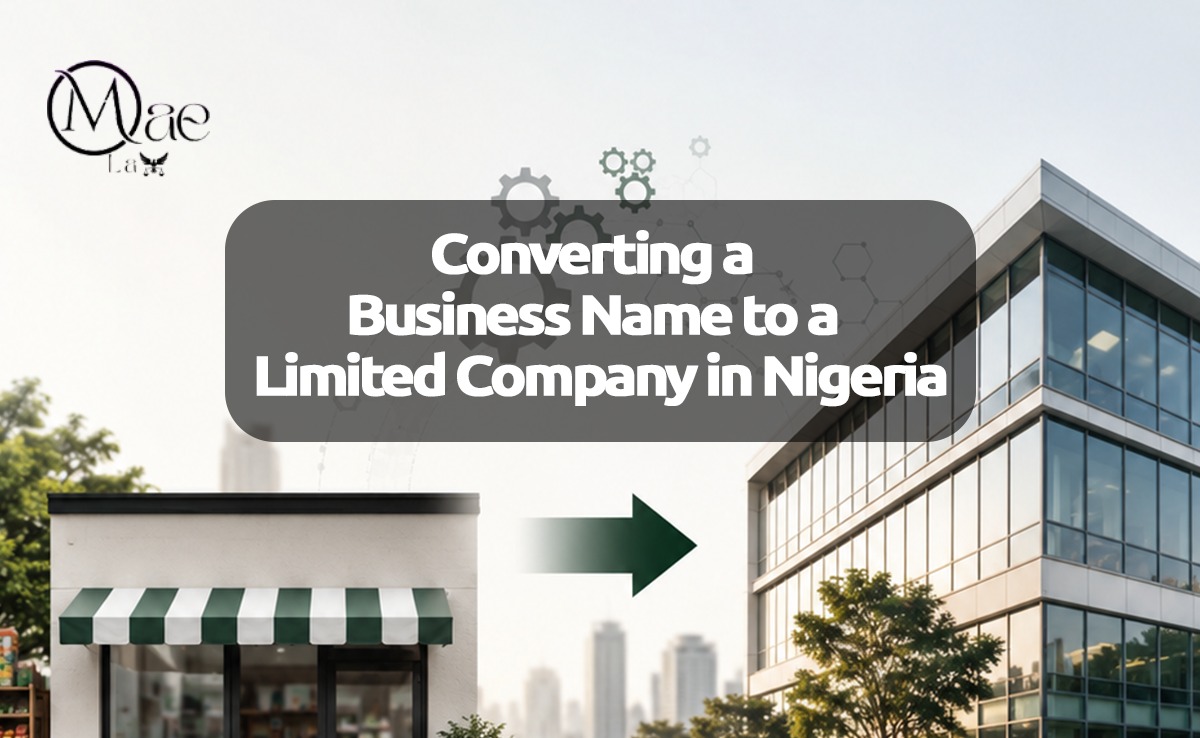
Many businessowners in Nigeria at inception opt to register a business name. It is usually the quickest and most affordable way to establish a legal presence and begin operations.
However, as a business grows, its needs often change. The owner may want to be in a position to attract investors, bid for larger contracts, expand operations, or enjoy greater legal protection. At this stage, converting a business name to a limited company becomes an important consideration.
While a business name may be best for small-scale operations, a limited liability company offers additional advantages that can support long-term growth and sustainability.
In this blog, we will explain what it means to convert a business name to a limited company in Nigeria, why businesses choose to do so, and the steps involved in the process.
Understanding the Difference Between a Business Name and a Limited Liability Company
Before discussing the conversion process, it is important to understand the distinction between the two business structures.
A business name is typically owned by one person (sole proprietorship) or two or more individuals (partnership). Although the business is registered, it is not considered a separate legal entity from its owners.
A limited company, on the other hand, is a separate legal entity. It can own assets, enter contracts, sue, and be sued in its own name. The company exists independently of its owners or shareholders.
This distinction is one of the main reasons many growing businesses eventually choose to incorporate as limited companies.
Why Convert a Business Name to a Limited Company?
There are several reasons why entrepreneurs choose to transition their businesses to a more advanced corporate structure.
1. Limited Liability Protection
The biggest advantage of operating as a limited company is that it protects the personal assets of its owners.
With a business name, the owner may be personally responsible for the debts and liabilities of the business. If the business encounters financial difficulties, personal assets such as savings, vehicles, or property could be at risk.
A limited company helps separate personal and business liabilities, reducing this risk.
2. Increased Business Credibility
Many clients, investors, government agencies, and corporate organisations regard incorportaed companies as more established and professional.
Having “Limited” or “Ltd” attached to your business name gives a more confident and professional outlook to customers and business partners.
3. Easier Access to Funding
Investors and financial institutions are often more willing to work with limited companies.
A company structure makes it easier to:
- Attract investors
- Raise capital
- Issue shares
- Apply for business loans
As businesses expand, access to funding becomes increasingly important.
4. Business Continuity
A limited company enjoys perpetual succession, meaning it can continue to exist even if the original owner retires, resigns, or passes away.
This provides greater stability and makes succession planning much easier.
5. Better Opportunities for Growth
Many government contracts, international partnerships, and corporate opportunities require businesses to operate as limited companies.
Converting your business can therefore open doors to new opportunities and larger markets.
Steps to Convert a Business Name into a Limited Liability Company in Nigeria
1. Ensure Annual Returns Are Up to Date
Before a registered business name can be converted into a limited liability company, it is important to ensure that all annual return requirements have been complied with. Annual returns are a mandatory filing requirement for all registered businesses in Nigeria and must be submitted each year, except for the year the business was originally registered. Bringing annual returns up to date is one of the first matters that must be addressed before commencing the conversion process.
2. Apply for Name Reservation
The next stage of the process is to reserve a company name with the Corporate Affairs Commission (CAC). Applicants are typically required to submit two proposed company names for approval. Each proposed name must end with either “Limited” or “Ltd.”
If one of the proposed names is approved and available, the CAC will reserve it for the incorporation process.
At this stage, information about the proposed company must also be provided, including:
- Proposed company name(s)
- Registered office address
- Email address and telephone number
- Nature and objectives of the business
- Details for the Memorandum and Articles of Association
- Information relating to directors and company secretary, such as:
- Full names
- Residential addresses
- Contact details
- Date of birth
- Occupation
Supporting documents may also be required, including:
- Letter of consent
- Existing business name registration certificate
3. Provide Share Capital and Shareholder Information
Once the company name has been reserved, the applicant will need to provide details regarding the company’s share capital structure and ownership.
This includes:
- Number of shares to be issued
- Details of shareholders
- Percentage ownership of each shareholder
Relevant supporting documents such as identification documents, signatures, and other required records must also be uploaded during this stage.
4. Payment of Registration Fees and Submission
After completing the required forms and uploading all supporting documents, the applicant will be required to pay the prescribed registration fees.
Once payment has been confirmed, the incorporation application can be submitted to the CAC for processing and review.
5. Issuance of Incorporation Documents
Upon successful approval of the application, the business will be formally incorporated as a limited liability company.
The CAC will issue:
- A Certificate of Incorporation
- A Company Status Report containing the company’s details
- The approved and stamped Memorandum and Articles of Association
At this point, the business officially becomes a separate legal entity and can operate as a limited liability company.
Conclusion
Starting with a business name is often the more favored path for entrepreneurs in Nigeria. However, as businesses grow and evolve, incorporating a limited company can provide the structure and protection needed to support future success.
Whether your goal is to attract investors, secure larger contracts, protect your personal assets, or build a lasting enterprise, upgrading to a limited company may be one of the most important decisions you make for your business.
For more information and guidance, contact us now.
This Post Has 0 Comments