Perhaps you registered a company but never traded. Or perhaps you ran a business for years and now want to move on. Closing a company in Nigeria takes more than abandoning its CAC registration.
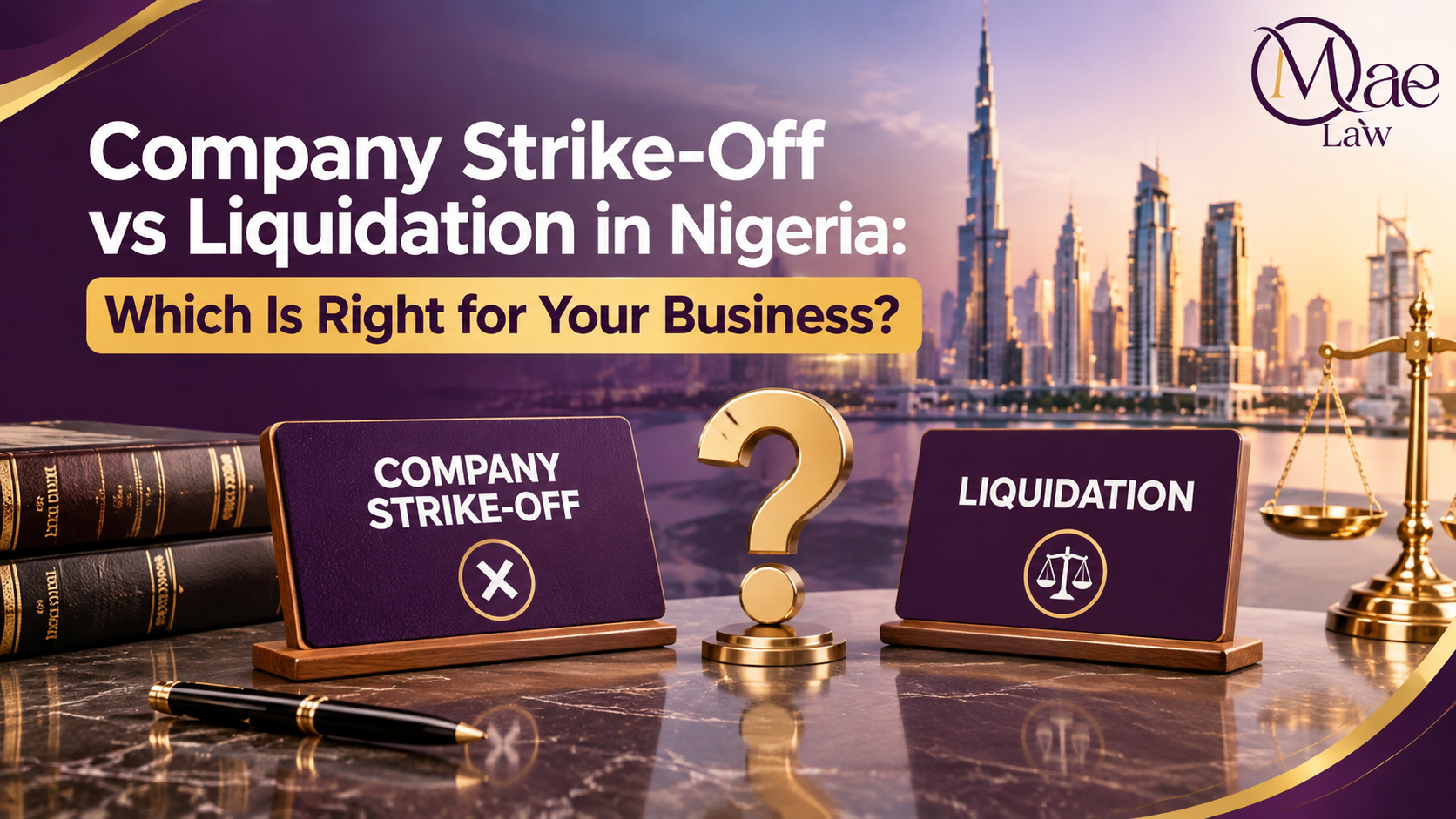
Two options you may hear about are company strike-off and company liquidation (winding up). Both can lead to dissolution, but their purposes differ. Choosing correctly helps avoid legal problems.
What Is Company Strike-Off in Nigeria?
Company strike-off means removing a company’s name from the register of the Corporate Affairs Commission (CAC). Section 692 of the Companies and Allied Matters Act (CAMA) 2020 provides for voluntary strike-off and strike-off initiated by the CAC.
Voluntary Strike-Off: For Companies That Never Started Business
A company applying voluntarily must not have commenced business and must have no undischarged obligations. Simply becoming inactive after trading does not qualify.
According to the CAC’s Operations Checklists, the main steps are:
- Pass a special resolution agreeing to apply for strike-off.
- Publish the resolution in three national daily newspapers within 28 days, inviting objections.
- Apply to the CAC, providing the required supporting documents and Form CAC 13.
- Allow time for objections. The CAC must be satisfied that the reasons are sufficient and no reasonable objection was received within 28 days of the last publication.
Approval is not automatic. Unpaid taxes or other obligations must be addressed.
Can the CAC Strike Off a Company Itself?
Yes. The CAC can also initiate strike-off when the circumstances in Section 692 apply, including cases involving inactivity or lengthy non-compliance. The law provides for notices in at least three national daily newspapers and a 90-day response period after the last publication before the CAC may remove the company’s name.
Do not rely on this process to close an active business.
What Is Company Liquidation in Nigeria?
Liquidation, or winding up, formally settles a company’s affairs. A liquidator handles assets, creditors, obligations, surplus funds and final filings.
There are three main routes.
1. Members’ Voluntary Winding Up
This suits a solvent company that can pay its debts in full.
Under Section 625 of CAMA, directors must make a declaration of solvency after reviewing the company’s finances. It must state that debts can be paid within 12 months or less from the start of winding up. The declaration must be made within five weeks before the winding-up resolution, and the declaration and resolution must be delivered to the CAC within 15 days after the resolution.
Members pass the required resolution and appoint a liquidator. Under Section 621, the company must notify the CAC and advertise the resolution in the Federal Government Gazette or two daily newspapers within 14 days.
2. Creditors’ Voluntary Winding Up
Where the company cannot meet its debts, a creditors’ voluntary winding up may be appropriate. The company and creditors hold meetings, and creditors receive information about its financial position.
Both sides may nominate a liquidator. If they nominate different people, the creditors’ choice generally takes priority, subject to the court’s powers.
3. Compulsory Winding Up
A court may order a company to be wound up under CAMA, including where it cannot pay its debts or where other statutory grounds apply. Specialist advice is important.
Can You Simply Stop Filing Annual Returns?
No. Leaving your company dormant is not the same as legally closing it. If it remains registered, statutory filing, tax and other obligations may continue, depending on its circumstances.
Incorrect closure affects creditors and employees.
Importantly, Section 692 preserves certain liabilities of directors, officers and members even after strike-off. An aggrieved person may ask the court to restore a voluntarily struck-off company within two years; for a CAC-initiated strike-off under Section 692(4), a different 10-year restoration period applies.
Section 693 also treats remaining company property as bona vacantia, generally vesting it in the State, subject to exceptions and court orders. Address assets before dissolution.
For related obligations, check CAC annual returns and statutory compliance and the risks of ignoring corporate governance rules in Nigeria.
How Do You Choose the Right Closure Process?
Start with three practical questions:
- Did the company ever trade? If not, and no obligations remain, voluntary strike-off may be possible.
- Can it pay all its debts? A business that traded but remains solvent may consider members’ voluntary winding up.
- Does it owe more than it can pay? Get advice on creditors’ voluntary winding up, court proceedings or other applicable insolvency options.
Gather company records, bank statements, contracts, tax records and creditor details. Check requirements with the Corporate Affairs Commission.
Why Professional Legal Guidance Helps
Legal support can confirm eligibility, prepare resolutions, communicate with creditors and arrange filings. Where company records need attention first, company secretarial and governance services may help.
Mae Law’s corporate legal services can guide business owners through the options. Advice helps you plan properly, although it cannot guarantee CAC approval or erase existing liabilities.
Conclusion
Closing a company in Nigeria should be a considered decision, not an unfinished administrative task. Strike-off may suit a company that never started business and owes nothing; liquidation provides a structured route for companies with business activities, assets or liabilities. Understanding the difference helps you choose a lawful, practical way forward.
If you’re considering company closure, Mae Law can help you review your circumstances and take the next steps with confidence.
This Post Has 0 Comments