
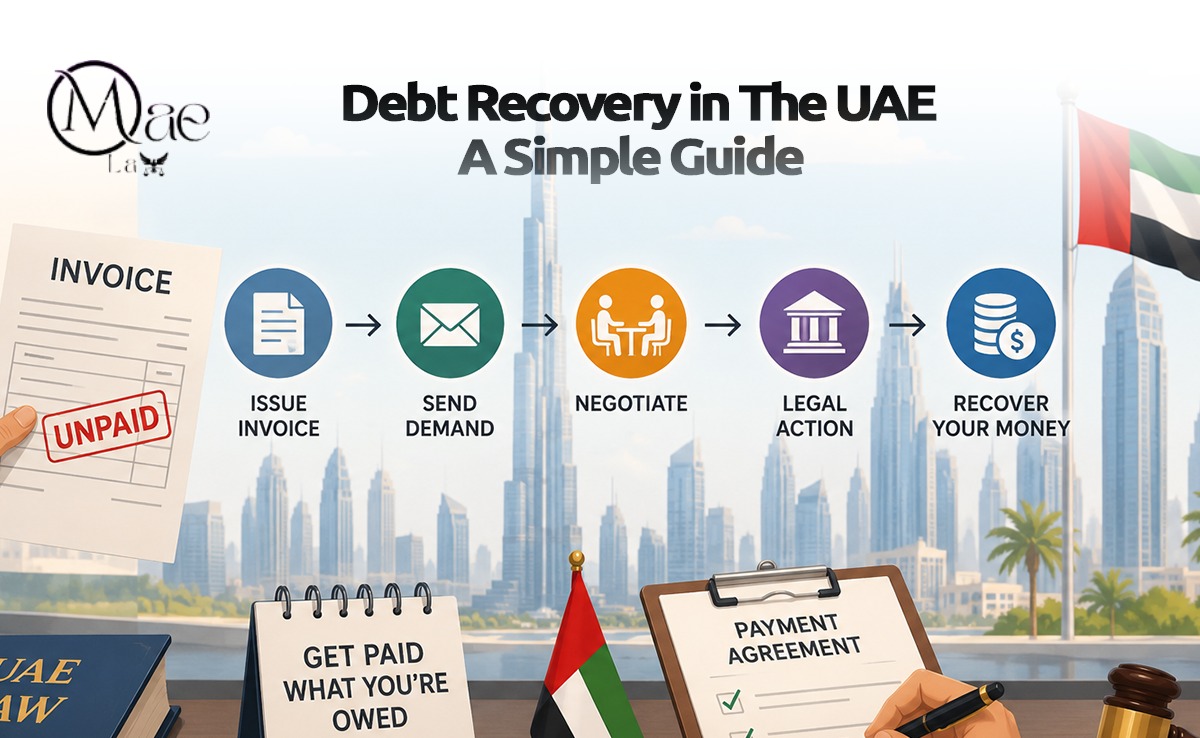
Late payments and unpaid debts are common challenges that businesses and individuals around the world often have to contend with. In the United Arab Emirates (UAE), debt recovery is an important legal process that helps creditors recover money owed to them while ensuring that debtors are treated fairly under the law.
Whether you are a business owner dealing with unpaid invoices, a landlord facing rent arrears, or an individual seeking repayment of a personal loan, understanding how debt recovery works in the UAE will help you protect your financial interests and take the right steps when payments are overdue.
This blog explains debt recovery in the UAE in simple and practical terms.
What Is Debt Recovery?
Debt recovery is simply the process of collecting money that is legally owed by one party to another. The debt may arise from various situations, including:
- Unpaid invoices for goods or services
- Outstanding loans
- Rent arrears
- Breach of contractual payment obligations
- Unpaid cheques
- Commercial transactions
The Debt recovery process involves informal negotiations, formal legal notices, settlement agreements, or litigation, depending on the circumstances of the case.
Why Debt Recovery Matters
Cash flow is at the heart of any business. When customers fail to pay on time, it can hinder a company’s ability to meet its own financial obligations, salary/wage payment, purchase inventory, or expand operations.
For individuals, unpaid debts can cause financial stress and create uncertainty.
Common Causes of Debt Disputes in the UAE
Debt-related issues are often caused by;
Financial Difficulties: A debtor may genuinely be experiencing financial hardship due to business losses, unemployment, or unexpected expenses.
Contractual Disputes: Sometimes the debtor disputes the amount owed or claims that the goods or services provided were defective or incomplete.
Poor Payment Management: Late payments may occur simply because of poor record-keeping, administrative errors, or ineffective payment processes.
Deliberate non-payment: In some cases, debtors intentionally delay or avoid payment despite having the means to settle the debt.
Identifying the underlying reason can help determine the most appropriate recovery strategy.
Key Laws Governing Debt Recovery in the UAE
1. UAE Civil Transactions Law (Federal Law No. 5 of 1985)
This law governs contracts and financial obligations, giving creditors the legal right to recover unpaid debts and enforce contractual agreements.
2. UAE Commercial Transactions Law (Federal Law No. 18 of 1993)
Regulates commercial and business transactions, including matters involving unpaid invoices, promissory notes, and dishonoured cheques.
3. Federal Decree-Law No. 19 of 2019 on Insolvency
Provides procedures for handling insolvent individuals and businesses, while allowing creditors to pursue recovery through restructuring or bankruptcy processes.
4. UAE Penal Code (Federal Law No. 3 of 1987)
Contains provisions that may apply where debts involve fraud, financial misconduct, or other criminal acts.
Free Zone Debt Recovery Frameworks
The Dubai International Financial Centre has an independent court system based on common law principles, offering an efficient platform for resolving commercial debt disputes.
6. ADGM Courts
The Abu Dhabi Global Market operates a separate legal framework and court system for handling commercial and financial disputes within its jurisdiction.
Why These Laws Matter
Understanding the applicable laws and jurisdiction is key in any debt recovery case, as the process may vary depending on the nature of the debt, the parties involved, and where the dispute arose.
Steps for Recovering a Debt in the UAE
1. Review the Debt and Contact the Debtor
The first step is to evaluate the debt and gather all relevant documents, such as contracts, invoices, receipts, and previous correspondence. Once you have confirmation of the sum owed, contact the debtor and request payment. In many cases, a simple reminder or discussion can resolve the matter without the need for legal action.
It is advisable to keep records of all communications for future reference.
2. Seek Professional Legal Assistance
If the debtor fails to respond or refuses to make payment, it may be beneficial to engage a legal professional experienced in debt recovery matters. A lawyer can assess the strength of your claim, advise on the most effective recovery strategy, and help protect your interests throughout the process.
3. Issue a Formal Demand for Payment
A formal demand letter is often the next step. This notice clearly outlines the outstanding debt sum, and also provides supporting details, and sets a deadline for payment. The letter serves as a final opportunity for the debtor to settle the matter before further legal measures are considered.
4. Consider Alternative Dispute Resolution
Before pivoting to litigation, parties are advised to explore alternative methods of resolving the dispute, such as negotiation, mediation, or arbitration. These options can often save time and costs while preserving commercial relationships and increasing the chances of reaching a mutually acceptable solution.
5. Commence Legal Proceedings
Where all attempts to recover the debt amicably have failed, legal action may be necessary. This involves filing a claim before the appropriate court and presenting evidence to support the claim. The court will review the facts of the case and determine whether the debt is legally recoverable.
6. Enforce the Judgment
Obtaining a favourable court judgment is not always the final step. If the debtor still defaults in payment, enforcement measures may be required. Depending on the circumstances, the court may authorise actions such as the attachment of assets or other lawful enforcement procedures to recover the outstanding amount.
7. Maintain Proper Records Throughout the Process
Throughout the debt recovery journey, it is important to keep detailed records of all documents, correspondence, payment requests, and legal actions. Proper documentation strengthens your position, supports your claim, and helps ensure a smoother recovery process should the matter proceed to court.
Conclusion
Debt recovery is an essential part of protecting financial interests in the UAE. Whether the debt arises from a commercial transaction, personal loan, rental agreement, or service contract, understanding the available recovery options can make a significant difference.
The most effective approach usually begins with clear communication and attempts at amicable resolution. Where this is unsuccessful, legal procedures provide a structured pathway for enforcing payment obligations and recovering outstanding debt
For more information and guidance, contact us now.
This Post Has 0 Comments